
The third workshop of the U-ELCOME project was held in the DLR premises in Cologne the past 27th and 28th of November. The workshop was focused on advancing the document U1 and U2 Implementation Best Practices Handbook. This document is a major outcome of the project which contains key recommendations, best practices, lessons learned and conclusions on the implementation of U1 and U2 services. The aim of this handbook is to capture the experience gained during the first phases of U-space implementation in order to serve as a guide for current and future implementers.
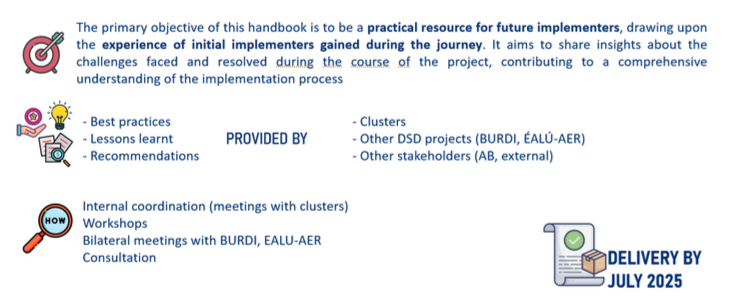
The outputs expected from the workshop were:
- Feedback on the document and its structure
- Feedback on the Lessons learned, recommendations and best practices
- Technical discussions regarding the topics and information included in the document
Assistants
There are 26 participating including the U-ELCOME team. This includes
- UAS Operator
- USSP & system supplier to USSP
- CISP & system supplier to CISP
- ANSP
- CAA
- Research organization
- U-space test centre
- Supplier of services to UAS Operators
Workshop
The workshop was structured as follows:
- Global introduction: U-space history and U-ELCOME
- Handbook introduction, purpose and structure
- Technical discussion I: Services
- Technical discussion II: Systems
- Technical discussion III: Communication, navigation and surveillance
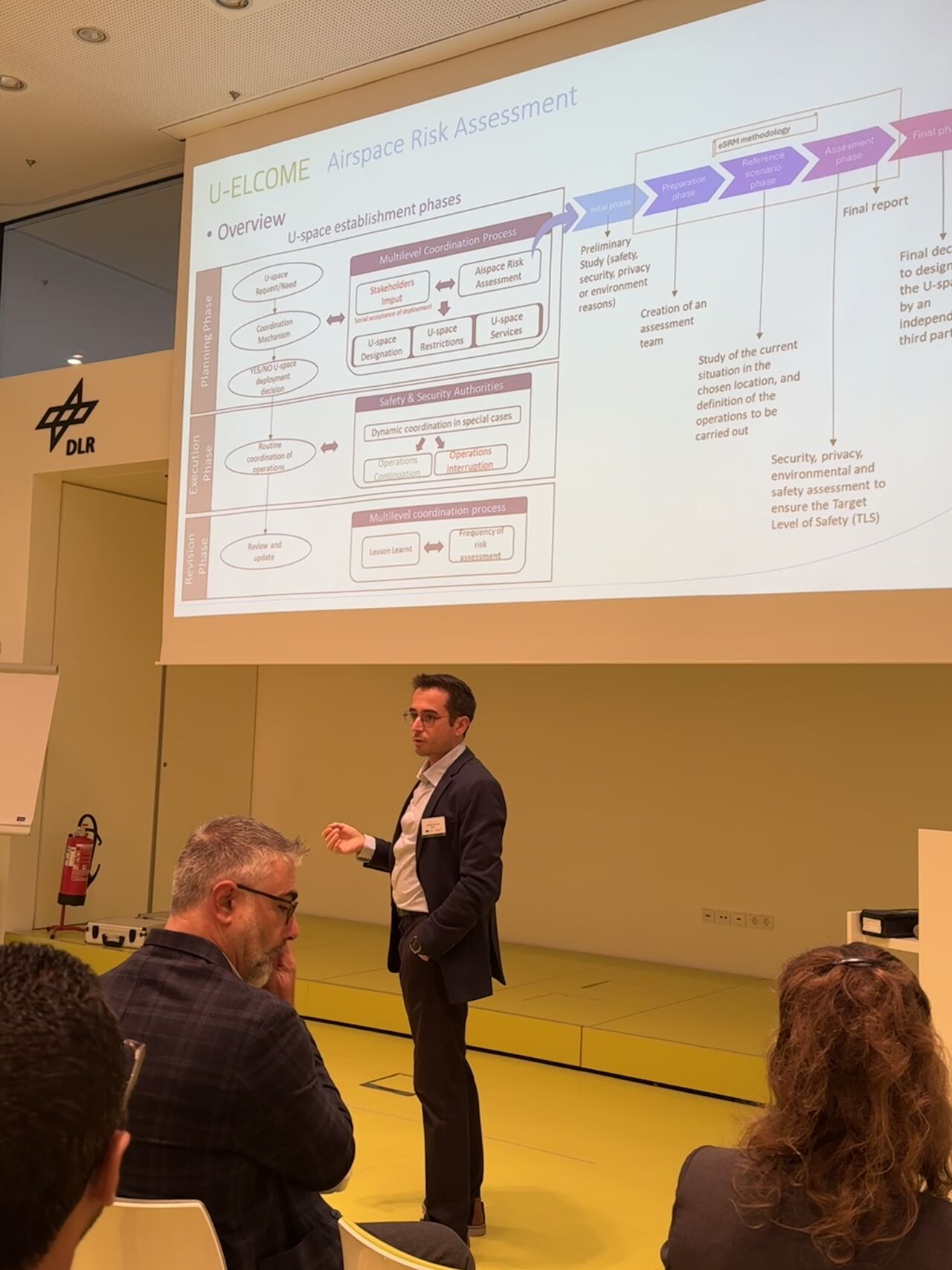
- Technical discussion IV: Airspace risk assessment
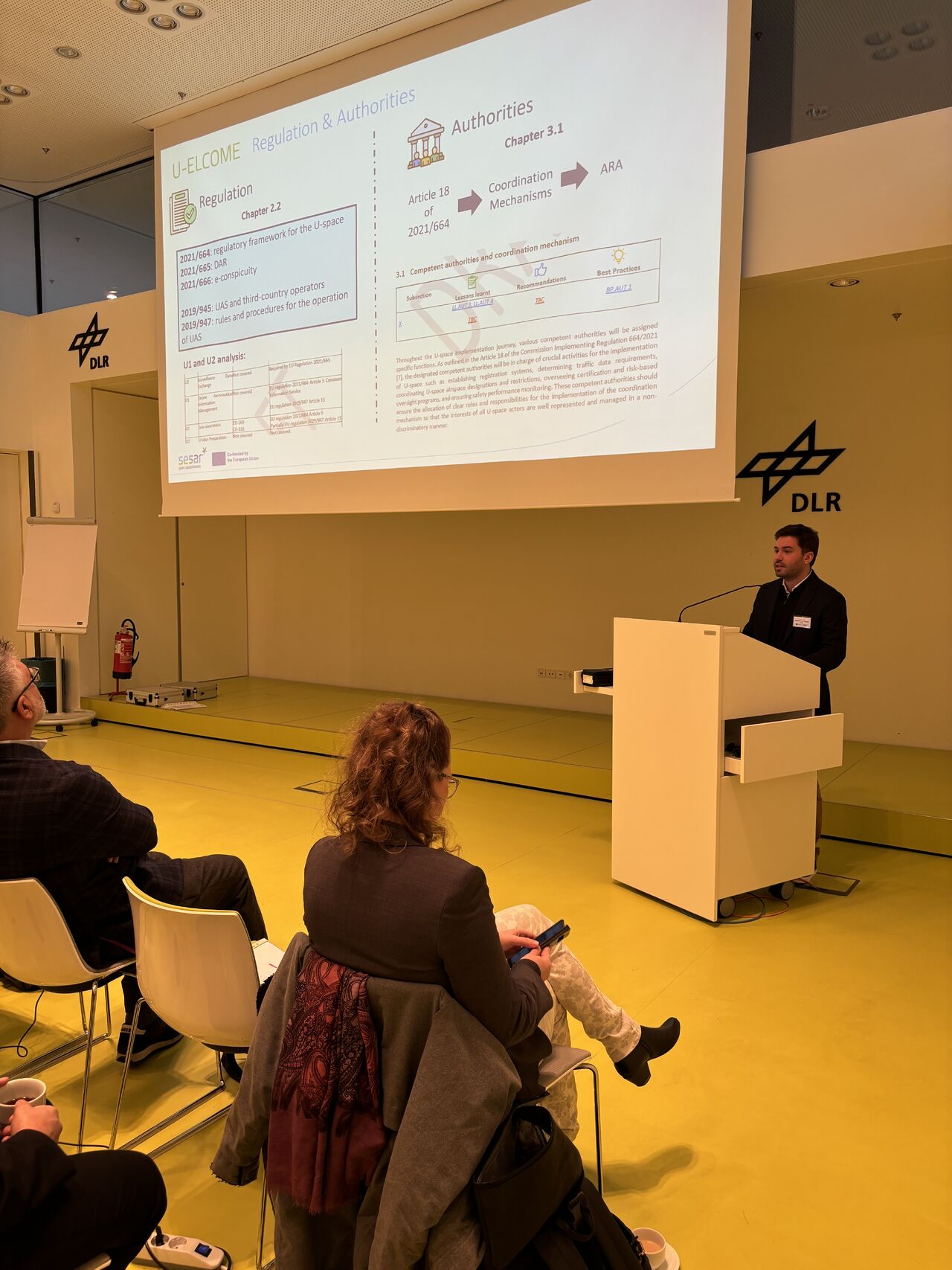
- Technical discussion V: Authorities, Regulation, Certification and Standardisation
- Technical discussion VI: Social acceptance and training
Main outcomes
Improvements to the Handbook
- Limit the number of Best Practices and Recommendations. Keep the lessons learned and discuss internally which ones (widely accepted) should be BP and RECOs.
- Better contextualize the LL, BPs and RECOs
- Include more experiences from outside the project (we are completely open to this so, please, don’t hesitate to send your contributions).
- Add sections/more information regarding:
- Transition to U-space airspace operations
- Automatic testing
- Dissemination and training
- State clearly the benefits of U-space and USSPs and show how USSPs help UAS operators in their “daily business”.
- More information/advice for CAAs
Systems and Services
- SWIM is currently used for exchanges between CISP and USSPs. It is considered and it should be implemented in all the exchanges.
- U-space Services are seen as a mitigation for air risks
- Population density maps are an essential tool for operator in order to be able to fly in urban environment
- Italy has a layer based on statistical data, but not an actual/real-time density
- Discussion about the need of having real-time data
- Weather information service is essential for BVLOS operations.
- In Dallas, they are going to develop an ASTM standard for weather. This might lead to certified weather service.
- Vertiports could be a place to put micro weather antennas
- Open discussion about weather services and the responsibilities of taking decisions (GO/NO GO)
- DAR & alerts: It ́s recommended to use technics to alert operator of alerts (voice, colour coding, etc)
- Automation of SORA and links between authorizations and Flight Authorization service is essential to highlight the benefits of U-space for operators. Open question: Who is responsible for it? Should it be a new U-space service or be included in the Flight Authorization?
CNS
- Trackers’ messages don’t include all the information required by Network-ID
- GNSS precision might vary between different U-space and might influence certain types of operations. The prior assessment should be part of ARA
- Certified USSP can provide services everywhere in Europe -> but the need to ensure that they have the coverage and the data available for each U-space vol.
- Satellite information as alternative for cellular networks, e.g. through Space X lower orbit satellites.
- Advice to change drone communication, e.g. SIM module inside the drone. With 5G network feature is available with dedicated coverage for drones (feature comes at extra cost)
- Too much coverage when flying high can be an issue, jumping from one cell to another. Problems are typical > 100m above ground. This should be tackled in the ARA.
- A standard to USSPs APIs installed in GCS is necessary
- Remote-ID infrastructure need to be ensured by USSPs (even though they are not the provider of the physical infrastructure). How should it be done?
- Some operators experienced better coverage with abroad SIM cards. (Topic to be further investigated)
- Open question about who should own the CNS infrastructure?
- General: Review the RECOs regarding CNS because some of them are too strong
ARA
- (Local) U-space coordinator has to be a well-known company/ person in the location where the U-space is going to be deployed
- It would be good to define templates for ARA
- Simulation is a tool that can support ARA.
- Automation of ARA once experience is gained is essential for success
- Regarding e-conspicuity, the type of technology to be used should be defined in the ARA process.
Authorities, Regulation, Certification and Standardisation
- C0 drone should NOT be excluded from U-space. Open question about how to deal with them. Standard scenario to fly in U-space could be a solution.
- Training module for U-space could be envisioned. Who is in charge of this? A European wide training for drone pilots in U-space should be mandatory
Iterative process
- Keep training U-space involved parts
- Include surveillance use cases since they are those who most concern the public
- Benefits of U-space should be disseminated to the general public
Closing remark
The workshop was held in a relaxed atmosphere with plenty of open technical discussions. The exchange of information during the workshop is key to further improving the handbook. A general comment was the need to maintain these technical exchanges in order to successfully deploy U-space, as well as the great utility of a document like the handbook that serves as a tool to collect experiences and trigger discussions.


